How Much Are My Old Vinyl Records Worth?
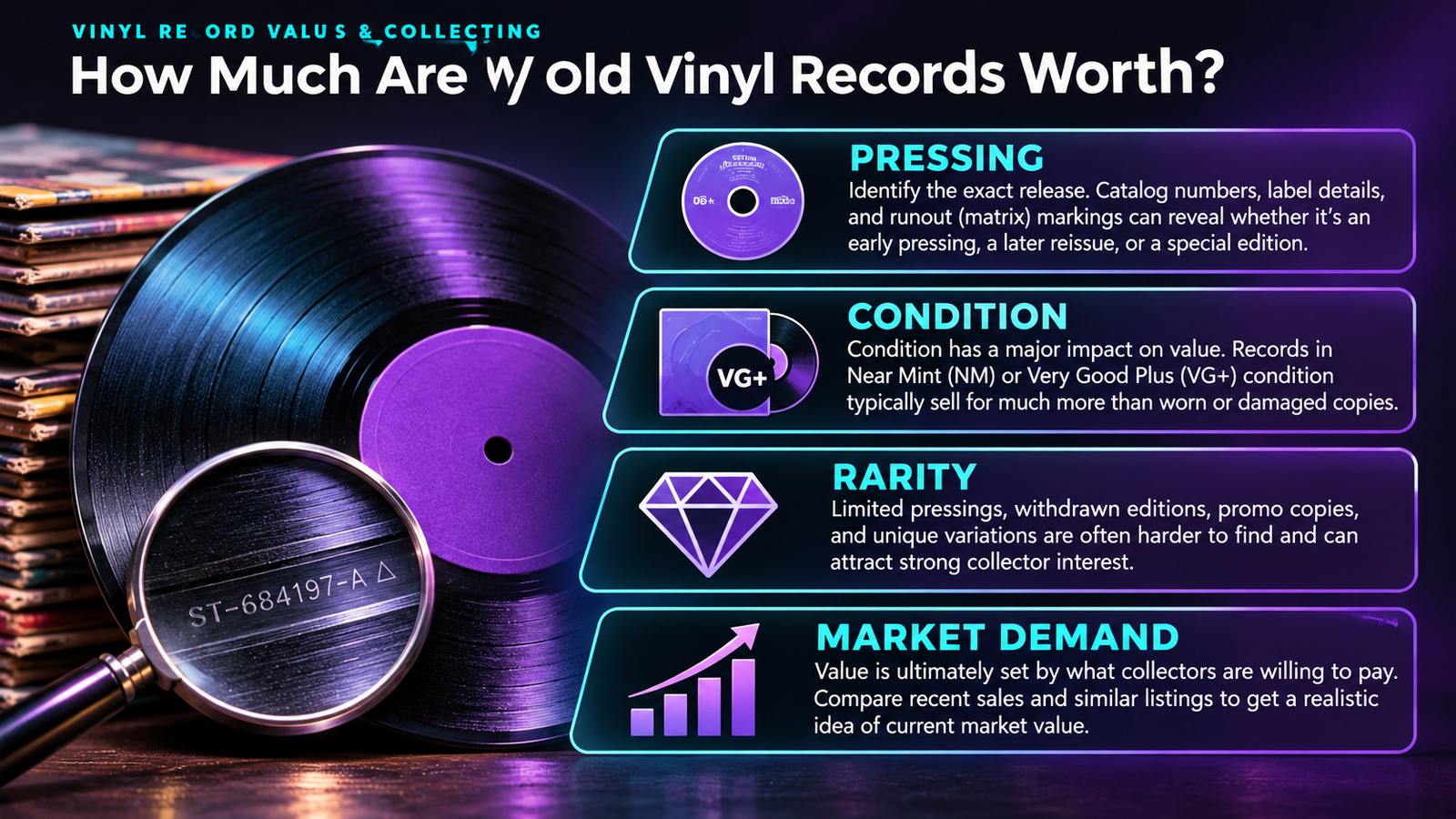
Perhaps you’ve inherited a collection of vinyl records, discovered a box of albums in the attic, or started wondering whether the records you’ve owned for decades might be valuable. It’s a question many collectors eventually ask: How much are my old vinyl records actually worth?
The answer depends on considerably more than the artist’s name or the age of the album. Some older records sell for only a few dollars, while certain rare pressings can attract substantial collector interest. Understanding the difference requires examining the record itself, identifying its exact release, evaluating its condition, and researching the market.
Are Old Vinyl Records Valuable?
Old vinyl records can be valuable, but age alone does not determine their worth. Millions of popular albums were manufactured during the 1960s, 1970s, and 1980s. Many remain readily available today, even when the original recordings are decades old.
A record becomes more interesting to collectors when demand exceeds the supply of desirable copies. That might happen because the original pressing was produced in limited quantities, a particular edition was withdrawn, or a record contains unusual music, artwork, or manufacturing characteristics.
Condition also matters. A rare album in excellent condition may command a premium, while a heavily scratched copy of the same pressing may sell for substantially less.
What Determines the Value of a Vinyl Record?
1. The Exact Pressing
Two records with identical covers can have very different market values. One may be an early pressing manufactured shortly after the album’s release, while another may be a later reissue produced years afterward.
Collectors examine catalog numbers, record labels, manufacturing information, and the matrix numbers found in the runout area near the center label. These details help identify the particular version of a record.
Our Vinyl Identification Guide explains how to recognize these characteristics, while our First Pressing vs. Reissue Guide explores the differences between original and later releases.
2. Record Condition
Condition is one of the most important factors affecting resale value. Collectors generally prefer records that have been carefully handled, stored properly, and played on well-maintained equipment.
Common grading descriptions include Near Mint (NM), Very Good Plus (VG+), Very Good (VG), Good (G), and Fair or Poor. Each describes a different level of wear, and the price difference between grades can be significant.
Scratches, groove wear, warping, persistent surface noise, and playback problems can reduce value. A record that looks clean may still have audible defects, so playback testing can provide useful additional information.
For a more detailed explanation, read our Vinyl Record Grading Explained guide.
3. Rarity and Collector Demand
A record may be difficult to find without being especially valuable. Rarity becomes financially meaningful when collectors actively want that particular release.
Some records attract attention because of withdrawn artwork, unusual label variations, limited distribution, promotional releases, or distinctive recording differences.
Other albums may be widely available but remain desirable because of the artist’s popularity. Understanding both supply and demand is essential when evaluating potential value.
Explore our Rare & Unusual Vinyl article for examples of collectible releases.
4. Album Covers and Original Inserts
The record itself is only part of the collectible package. Original jackets, printed inner sleeves, posters, lyric sheets, promotional materials, and other inserts may influence the value of particular editions.
Collectors also examine cover condition. Ring wear, split seams, damaged corners, writing, stains, and missing artwork can reduce desirability.
A complete album with its original packaging may be more desirable than an otherwise comparable copy missing important components.
5. Actual Market Demand
The price someone asks for a record is not necessarily what another collector will pay. Sellers can advertise an album for almost any amount, but asking prices alone do not establish market value.
Recent comparable sales, available listings, condition, and the exact pressing provide a more useful basis for estimating what a record might sell for.
How to Find Out What Your Records Are Worth
A careful valuation starts with identifying the record rather than searching only for the artist and album title.
- Identify the artist and album. Record the title, label name, catalog number, and country of release if known.
- Examine the center label. Look for distinctive colors, logos, publishing information, and manufacturing details.
- Check the runout markings. Matrix numbers and other inscriptions can help distinguish pressings.
- Evaluate the condition. Examine the vinyl and jacket separately, and note scratches, wear, and missing inserts.
- Compare matching releases. Research listings and sales involving the same pressing in similar condition.
- Estimate a realistic range. Consider multiple comparable records rather than relying on one unusually high or low price.
Why Online Vinyl Prices Can Be Misleading
Searching online for an old album sometimes produces wildly different prices. One seller might list a record for $15 while another advertises what appears to be the same album for several hundred dollars.
There are several possible explanations. The records may be different pressings, their condition may vary, or one seller may simply be asking an unrealistic price.
When researching values, distinguish between records currently offered for sale and records that have actually sold. Completed sales can provide stronger evidence of what buyers have recently been willing to pay, provided the releases and conditions are comparable.
Be especially cautious about valuations based on a single unusually expensive listing. Our Common Vinyl Valuation Mistakes guide explains how collectors can avoid misleading comparisons.
Are Vinyl Records From the 1960s and 1970s Worth Money?
Some are, but many are relatively common. The 1960s and 1970s produced enormous quantities of popular records, including albums that remain easy to find in used record stores and private collections.
Collectors may pay more for particular early pressings, unusual editions, scarce regional releases, and well-preserved examples of desirable recordings. However, an album’s original release date does not prove that an individual copy is an original pressing.
For example, a record released in 1968 might have been manufactured again in 1975, 1982, or much later. The copy in your collection must be examined to determine which edition you actually own.
What About Records From the 1980s and 1990s?
Records from the 1980s and 1990s can also be collectible. Certain releases from periods when vinyl production was declining may be less common than collectors expect, particularly in genres where compact discs became the dominant format.
Nevertheless, production quantities, surviving copies, artist popularity, and condition still determine demand. Not every album from a less vinyl-focused period is scarce or valuable.
Should You Clean Old Vinyl Records Before Valuing Them?
Dust and surface debris can make records appear worse than they are. Careful cleaning with appropriate record-cleaning equipment may help reveal the actual condition of the vinyl and improve playback.
Avoid household cleaners, abrasive materials, and aggressive cleaning methods that could damage the grooves or labels. Cleaning cannot repair scratches, groove wear, or permanent damage.
If a record appears particularly rare, consider obtaining expert advice before attempting extensive cleaning or restoration.
Should You Sell Records Individually or as a Collection?
Selling an entire collection may be convenient, especially when it contains hundreds of albums. However, a bulk buyer usually needs room for resale expenses and profit, so a collection offer may be lower than the combined potential retail prices of individual records.
Selling records individually can sometimes produce higher gross proceeds, but it requires research, photography, accurate descriptions, packaging, shipping, and time.
Before deciding, identify any records that might be unusually desirable. A collection containing mostly common albums may still include a few pressings worth researching separately.
Can You Estimate the Value of a Record Collection?
Yes, but the quality of the estimate depends on how carefully the records are identified and graded. Multiplying the number of albums by an assumed average price may provide a rough planning figure, but it can overlook both unusually valuable records and common records with limited resale demand.
A more useful approach is to review the collection systematically, identify potentially interesting pressings, and compare market information for those records. The remaining common titles can then be assessed in groups where appropriate.
Frequently Asked Questions About Old Vinyl Records
Are records worth more if they are still sealed?
Sometimes. Original sealed copies of desirable pressings may attract collector interest. However, sealing alone does not establish rarity, authenticity, or perfect condition. Records can develop storage-related problems even when unopened.
Are first pressings always valuable?
No. A first pressing may be common, while a later edition may be scarcer or more desirable. The value depends on the specific release and collector demand.
Does a famous artist make a record valuable?
Not necessarily. Popular artists often sold millions of records. Some releases are common, while particular editions, label variations, or promotional copies may be much more collectible.
Can a scratched vinyl record still have value?
Yes, particularly if the pressing is scarce and desirable. However, damage usually reduces the amount collectors are willing to pay, and serious playback problems can reduce value substantially.
Where can I research my vinyl record’s value?
Begin by identifying the exact pressing and evaluating its condition. Then compare relevant market information rather than relying solely on asking prices or generic album valuations.
The Bottom Line: Know What You Own
The most important step in determining what old vinyl records are worth is identifying exactly what you have. Album titles, artist names, and release dates are useful starting points, but they rarely tell the complete story.
Pressing variations, condition, original packaging, rarity, and collector demand all influence market value. Taking the time to examine these details can help you avoid overlooking an interesting record or overestimating the value of a common one.
Discover What Your Vinyl Records May Be Worth
Once you’ve identified your records, use KlassicVinyl to explore condition-based Discogs prices and comparable eBay listings. Research your first three records free, with no paid subscription required.