How to Identify Rare Vinyl Records in Your Collection
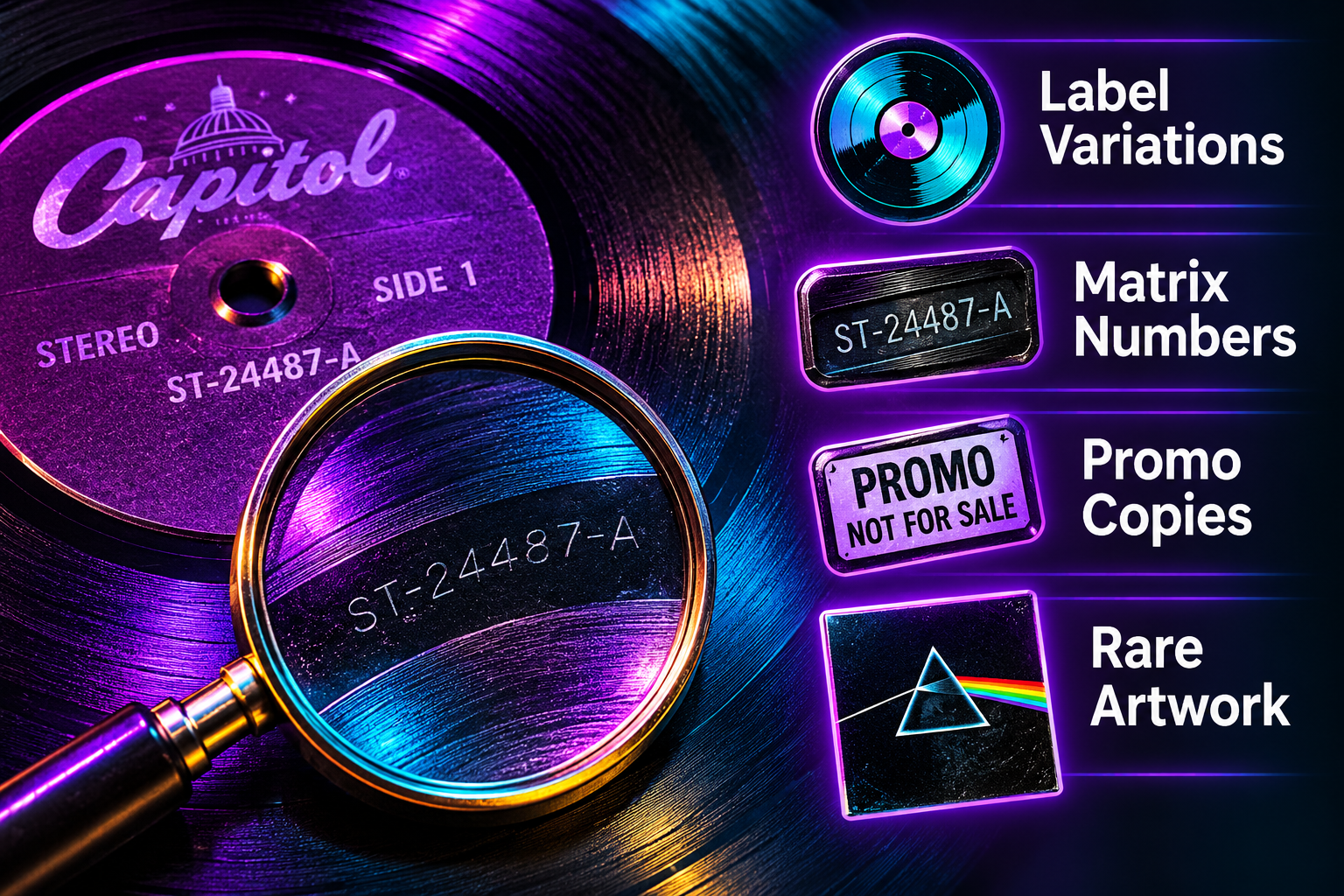
Some of the most interesting vinyl discoveries begin with an ordinary box of records. An inherited collection, a thrift-store purchase, or albums stored away for decades may contain unusual pressings that are easy to overlook.
But how can you tell whether a record is genuinely rare? The answer involves more than its age, artist, or cover artwork. Collectors examine manufacturing details, label variations, release history, and surviving copies to identify records that may be harder to find than others.
This guide explains the clues worth investigating before deciding whether a record deserves further research.
What Makes a Vinyl Record Rare?
A rare record is generally one that exists in relatively limited quantities compared with more common releases. That scarcity may result from a small production run, restricted distribution, a withdrawn edition, or an unusual manufacturing variation.
However, rarity and value are not the same thing. A record can be scarce but attract little demand, while a relatively common album may have an active collector market.
The goal is to identify potentially unusual editions first, then investigate whether collectors actually seek them.
Eight Clues That a Vinyl Record May Be Rare
1. Unusual Record Labels
Examine the paper label at the center of the record. Label designs often changed over time as record companies updated logos, colors, copyright notices, and manufacturing arrangements.
An early label variation may distinguish one pressing from later copies. Some editions also contain printing differences or promotional markings.
Compare the label against documented examples of the same album. Small details can matter, but a different label design alone does not prove rarity.
2. Matrix Numbers and Runout Markings
The smooth area between the final groove and the center label is known as the runout or deadwax area. It often contains stamped or handwritten numbers, letters, and symbols.
These markings can help distinguish manufacturing variations, lacquer cuts, and pressing facilities. Some releases have especially collectible runout combinations.
Carefully examine both sides under good lighting and record the inscriptions exactly as they appear.
For more detail, read our Guide to Reading Vinyl Matrix Numbers.
3. Promotional or Demonstration Copies
Some records were distributed to radio stations, reviewers, retailers, or industry contacts rather than sold through ordinary retail channels.
These may have promotional labels, stamps, stickers, or special catalog numbers. Certain promotional editions were manufactured in smaller quantities or contain unique mixes.
However, not every promotional record is rare or valuable. Some were distributed widely, and a promotional sticker on an otherwise standard retail record does not necessarily indicate a unique pressing.
4. Withdrawn or Replaced Artwork
Occasionally, a record company changed an album cover after initial copies had been manufactured or distributed.
Early examples with withdrawn artwork can become collectible, particularly when relatively few survive in desirable condition.
One well-known example is the Beatles’ Yesterday and Today album with its original controversial cover artwork. Authenticity, cover state, pressing details, and condition are important when evaluating such copies.
Learn more in our Rare & Unusual Vinyl feature.
5. Early Pressings and Original Releases
Original pressings may interest collectors because they represent early manufacturing runs or contain distinctive label and mastering characteristics.
But the original release year printed on a jacket does not prove that the record inside was pressed that year. Later editions frequently retain earlier copyright dates.
Look at the record label, catalog number, runout inscriptions, and known release history together.
Our First Pressing vs. Reissue guide explains how to investigate these differences.
6. Unusual Formats and Variations
Some collectible releases stand out because of their format or physical characteristics. Examples include picture discs, colored vinyl, shaped records, unusual sizes, and special packaging.
These characteristics can indicate a limited edition, but they do not automatically establish scarcity. Modern colored-vinyl releases, for example, may be produced in substantial quantities.
Research the specific edition rather than assuming that an unusual appearance guarantees value.
7. Limited Regional or Independent Releases
Small independent labels sometimes produced records in limited quantities, particularly for regional artists or specialized musical genres.
Local distribution, limited promotional budgets, and short production runs can make surviving copies difficult to locate.
Collectors interested in regional soul, jazz, punk, psychedelic rock, and other specialized genres may seek particular releases that were never widely distributed.
Still, limited production must be considered alongside genuine collector demand.
8. Missing or Unusual Tracks
Some records were manufactured with alternate mixes, different track listings, incorrect labels, or versions of songs that were later replaced.
These differences can distinguish one edition from another, sometimes creating substantial collector interest.
For example, certain early copies of Bob Dylan’s The Freewheelin’ Bob Dylan contain tracks that were replaced before the standard album became widely available.
Identifying such variations requires careful examination of the actual audio, labels, and documented pressing details.
How to Examine a Record for Rare Pressing Clues
If you discover a record that looks unusual, begin with a simple inspection before searching for prices.
- Record the artist and title. Include the label name and catalog number.
- Photograph both record labels. Capture colors, logos, and printed details clearly.
- Inspect the runout area. Write down stamped and handwritten markings from both sides.
- Examine the jacket. Look for unusual artwork, printing differences, stickers, and inserts.
- Identify the country and approximate manufacturing period. Use documented pressing characteristics rather than the copyright date alone.
- Compare known editions. Check whether the combination of details matches a documented release.
- Research market demand. Compare the identified pressing with relevant sales and current listings.
Does an Old Record Automatically Become Rare?
No. Many records from the 1950s through the 1980s were manufactured in very large quantities. Even after decades of use and storage, substantial numbers of common albums remain available.
A record’s age may provide historical context, but scarcity depends on the particular edition and how many comparable copies are available.
It is entirely possible for a newer limited release to be harder to find than a much older best-selling album.
Does Rare Always Mean Valuable?
Not necessarily. Collector value depends on several factors working together: scarcity, demand, condition, authenticity, and the availability of comparable copies.
A genuinely rare record with little buyer interest may have a modest resale value. A desirable pressing in exceptional condition may attract stronger interest.
Be cautious about using advertised prices as evidence of value. Sellers can list records at almost any price, and unusually high asking prices may not reflect actual sales.
For a fuller explanation, see How Much Are My Old Vinyl Records Worth? and Common Vinyl Valuation Mistakes.
What Should You Do If You Find a Potentially Rare Record?
Handle it carefully by the edges and label, and avoid touching the playing surface. Keep the record in an appropriate protective sleeve and store it upright in a stable environment.
Do not attempt aggressive cleaning or repair methods. Scratches, damaged labels, and inappropriate cleaning can reduce collectible condition.
Document the record’s characteristics before selling it or making assumptions about its value. Clear photographs and accurate descriptions can help with identification.
Frequently Asked Questions
Are promotional vinyl records rare?
Some are, particularly editions with unique mixes or limited distribution. Others are relatively common. The exact promotional release must be identified before assessing rarity.
Are colored vinyl records more valuable?
Not automatically. Some colored editions are limited and collectible, while others are widely produced. Pressing details, demand, and condition remain important.
Are first pressings always the rarest?
No. Later editions, withdrawn versions, regional releases, and unusual manufacturing variants can sometimes be scarcer than an original pressing.
Can a record be rare even if the artist is unknown?
Yes. Small independent releases may be difficult to find, although rarity alone does not establish a high market value.
Where should I start when researching an unusual record?
Begin with the record label, catalog number, and runout inscriptions. Identify the exact release before comparing prices or making a valuation.
The Bottom Line: Look Beyond the Album Cover
Rare vinyl records are not always immediately recognizable. The most useful clues may be found in the center label, the runout area, the jacket, or the history of a particular release.
By learning how to recognize these details, collectors can investigate unusual records more accurately and avoid overlooking potentially interesting pressings.
Once you have identified the release, the next step is to research its market value using comparable records in similar condition.
Found an Interesting Record?
Use KlassicVinyl to explore condition-based Discogs prices and comparable eBay listings. Research your first three records free, with no paid subscription required.