Common Vinyl Record Care Mistakes
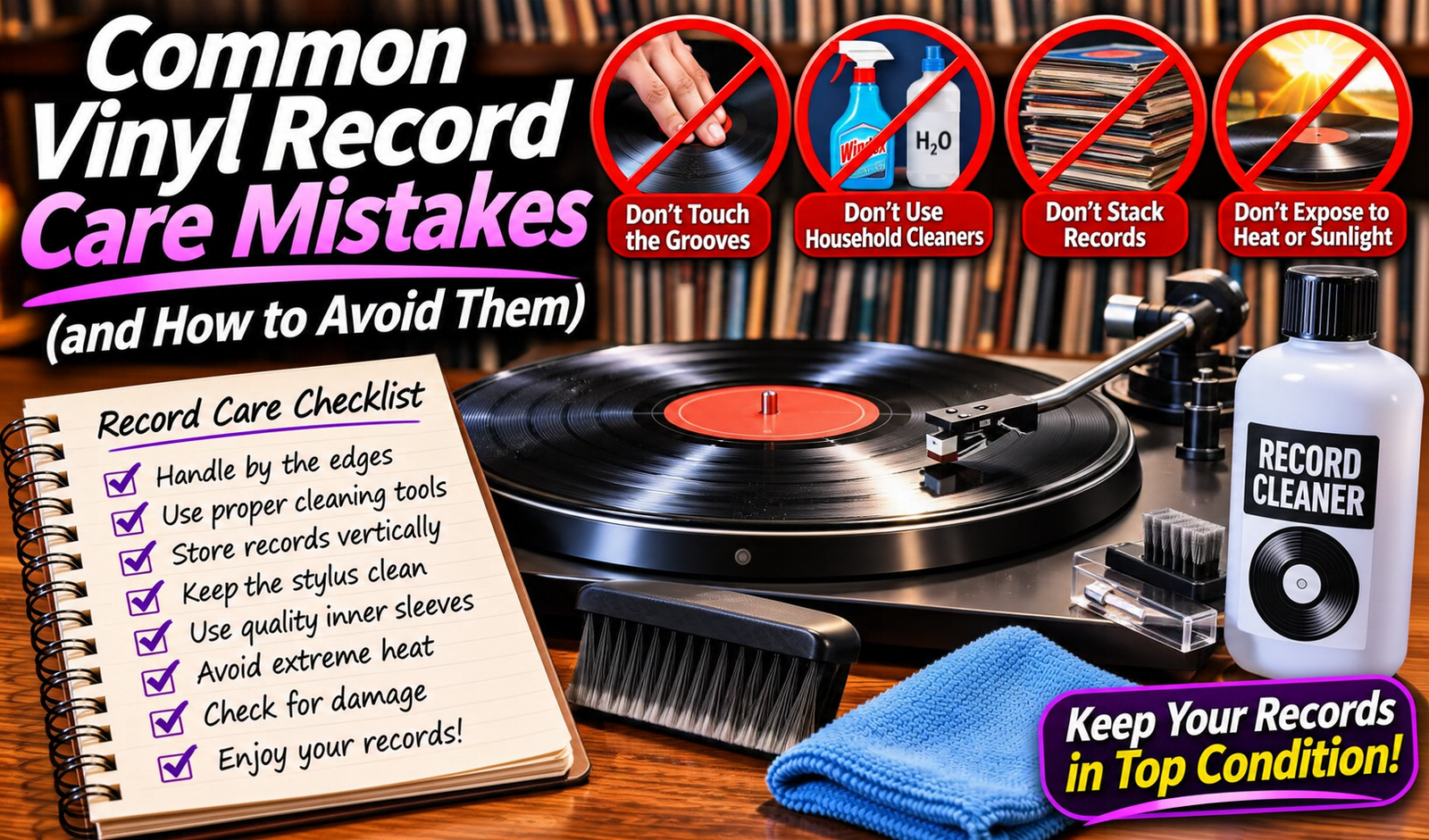
Vinyl record care mistakes can shorten the useful life of a record collection, introduce unwanted playback noise, and reduce the value of collectible pressings. Many of these problems are preventable with a few simple habits.
Vinyl records are remarkably durable when handled correctly, but their microscopic grooves are vulnerable to dirt, abrasion, excessive heat, and improper playback equipment. Even an expensive record can suffer permanent damage from careless handling or storage.
Whether you are beginning your first collection or maintaining hundreds of albums, understanding the most common mistakes can help preserve both sound quality and collectible condition.
This guide examines 15 common vinyl record care mistakes, explains why they matter, and offers practical ways to avoid them.
Why Proper Vinyl Record Care Matters
A vinyl record stores sound in a continuous spiral groove. During playback, the stylus follows extremely small variations in that groove, converting mechanical movement into an electrical signal.
Dust, scratches, groove wear, and physical deformation can interfere with this process. Some problems cause occasional clicks or pops, while others produce persistent distortion, skipping, or pitch instability.
Proper care also matters financially. Collectors often pay considerably more for well-preserved records, especially desirable original pressings and rare editions.
For more information about evaluating condition, visit our Vinyl Record Grading Guide.
1. Touching the Playing Grooves
One of the most common vinyl record care mistakes is touching the playing surface with bare fingers.
Natural skin oils, perspiration, and dirt can transfer onto the grooves. These contaminants attract additional debris and may become more difficult to remove over time.
What to Do Instead
- Hold records by their outer edges.
- Support the disc with a finger near the center label when necessary.
- Avoid touching the grooved playing surface.
- Make sure your hands are clean and dry.
- Return records to their sleeves after playback.
Developing good handling habits is one of the easiest ways to reduce unnecessary contamination.
2. Using Household Cleaning Products
Household glass cleaners, furniture polish, general-purpose sprays, and other domestic cleaning products are not appropriate substitutes for record-cleaning solutions.
These products may contain fragrances, detergents, ammonia, additives, or other ingredients that leave residue or are unsuitable for record materials.
Some cleaning agents can also damage printed center labels if they come into contact with the paper.
What to Do Instead
Use a cleaning solution specifically formulated for the type of record being cleaned, and follow the manufacturer’s instructions.
Traditional shellac 78 RPM records require special consideration because alcohol-containing cleaners can damage shellac.
For detailed instructions, see our How to Clean Vinyl Records Safely guide.
3. Cleaning Records With Rough Cloths or Paper Towels
Paper towels, tissues, and rough household cloths may leave fibers behind or drag abrasive particles across the playing surface.
Even a soft cloth can cause problems if it contains trapped grit.
What to Do Instead
Use clean, purpose-designed record brushes and appropriate lint-free cleaning materials. For deeper cleaning, consider a manual record-cleaning system or a suitable record-cleaning machine.
Avoid pressing heavily on the record, and never scrub aggressively across the grooves.
4. Playing Records With a Dirty Stylus
The stylus is the tiny component that contacts the record groove. During playback, dust and other debris can accumulate around its tip.
A dirty stylus may cause distortion, reduced clarity, or mistracking.
Continuing to play records with a contaminated or damaged stylus can increase the risk of groove wear.
What to Do Instead
- Inspect the stylus periodically.
- Use a stylus-cleaning method approved by the cartridge manufacturer.
- Follow the recommended brushing direction and technique.
- Never apply excessive force to the cantilever.
- Replace worn or damaged styli according to manufacturer guidance.
A clean stylus and a clean record work together to maintain good playback quality.
5. Ignoring Tracking Force and Cartridge Alignment
A poorly adjusted turntable can cause playback problems even when the record itself is in excellent condition.
Incorrect tracking force, cartridge alignment, or anti-skate settings can contribute to distortion and mistracking.
Contrary to a common misconception, setting tracking force far below the cartridge manufacturer’s recommended range is not necessarily safer. Too little force can cause the stylus to mistrack.
What to Do Instead
Follow the cartridge manufacturer’s recommended tracking-force range. Use appropriate setup tools to check alignment and verify that the turntable is level.
If you are unfamiliar with turntable adjustments, consult the equipment manual or an experienced technician.
6. Stacking Vinyl Records Horizontally
Stacking records flat may seem convenient, but long-term horizontal storage can place uneven pressure on the records and jackets near the bottom of a pile.
Heavy stacks can contribute to jacket damage and may increase the risk of deformation under unfavorable conditions.
What to Do Instead
Store records vertically on sturdy, appropriately sized shelving. Keep them upright without packing them so tightly that removing an album becomes difficult.
Use dividers or additional support for long rows of records.
Our How to Store Vinyl Records guide explains proper shelving and storage practices.
7. Exposing Records to Heat and Direct Sunlight
Vinyl records can deform when exposed to excessive heat, particularly when heat is combined with pressure or uneven support.
Leaving records inside a parked vehicle, near a heating vent, or in direct sunlight can create conditions that encourage warping.
Direct sunlight can also fade album artwork and accelerate deterioration of packaging materials.
What to Do Instead
- Store records in a cool, stable indoor environment.
- Avoid direct sunlight.
- Keep records away from radiators and heating vents.
- Do not leave records in hot vehicles.
- Avoid poorly insulated attics and other areas with extreme temperature changes.
If a record is warped, avoid improvised flattening methods involving ovens, sunlight, or household heating appliances.
8. Using Damaged or Inappropriate Inner Sleeves
Inner sleeves protect the record while it is stored inside its jacket. However, old, dirty, torn, or unsuitable sleeves can introduce problems of their own.
Some basic paper sleeves shed fibers, while rough or contaminated materials may contribute to surface scuffing.
Certain flexible PVC materials can also be unsuitable for prolonged contact with records.
What to Do Instead
Choose clean, properly sized inner sleeves made from suitable materials, such as quality polyethylene or poly-lined paper.
Retain original printed inner sleeves when they are part of the collectible release, even if the record is placed in a modern protective replacement.
Learn more in Vinyl Inner Sleeves Explained.
9. Storing Records in Damp Environments
Excessive moisture can damage album jackets, printed sleeves, labels, and other paper components.
Damp storage conditions may encourage mold growth and unpleasant odors. These problems can be particularly serious for valuable collections.
What to Do Instead
Choose a clean, dry storage area with reasonably stable temperature and humidity.
Avoid placing records directly on basement floors or against damp exterior walls. Monitor storage areas for moisture problems and water intrusion.
If you discover mold on records or sleeves, avoid spreading contamination to the rest of your collection. Significant contamination may require professional conservation advice.
10. Leaving Records Unprotected After Playback
Leaving a record on a turntable for extended periods exposes it to airborne dust, accidental contact, and possible damage.
Records left outside their sleeves can accumulate debris even when they are not being played.
What to Do Instead
After playback, lift the tonearm, allow the platter to stop, and carefully return the record to its inner sleeve and jacket.
Keep the turntable’s dust cover closed when appropriate and follow the equipment manufacturer’s recommendations.
11. Playing Dirty Records Without Cleaning Them
Dust and debris can become trapped between the stylus and groove during playback.
This may increase surface noise and contribute to stylus contamination or unwanted abrasion.
New records are not necessarily perfectly clean. Some may contain dust, paper fibers, or residue from manufacturing and packaging.
What to Do Instead
Inspect records before playback. Remove loose dust with an appropriate record brush, and use a suitable deeper cleaning process when needed.
Allow wet-cleaned records to dry completely before placing them into clean sleeves.
12. Cleaning Records Too Aggressively
More cleaning is not always better. Excessive scrubbing, unnecessary chemicals, or repeated handling can introduce new risks.
A record that is already clean may need only light dust removal rather than a complete wet-cleaning session before every play.
What to Do Instead
Match the cleaning method to the record’s actual condition. Use gentle, tested procedures and avoid unnecessary pressure.
If a noise persists after appropriate cleaning, it may result from groove damage or a manufacturing defect rather than dirt.
Our Common Vinyl Manufacturing Defects guide explains several problems that cleaning cannot repair.
13. Mishandling Rare or Valuable Pressings
Rare records sometimes include original inserts, promotional materials, special labels, or unusual packaging that contributes to their collectible appeal.
Discarding original materials, applying stickers, writing on sleeves, or attempting cosmetic repairs can reduce desirability.
What to Do Instead
- Preserve original inner sleeves and inserts.
- Use appropriate protective outer sleeves.
- Avoid adhesive labels on collectible packaging.
- Document unusual pressing details.
- Photograph existing condition before undertaking conservation work.
- Seek specialist advice before attempting restoration of valuable items.
For identification advice, visit How to Identify Rare Vinyl Records.
14. Failing to Inspect Newly Purchased Records
Collectors sometimes assume a new or sealed record must be in perfect condition.
Unfortunately, new records can contain pressing defects, warping, scratches, or packaging damage.
Waiting too long to inspect a purchase can also complicate returns or exchanges.
What to Do Instead
- Inspect the jacket for shipping damage.
- Examine the vinyl under suitable lighting.
- Check for warping and visible defects.
- Confirm that the correct record and inserts are present.
- Play-test the record when appropriate.
- Document significant problems promptly.
- Contact the retailer within the applicable return period.
15. Believing Common Vinyl Care Myths
Record collectors encounter plenty of conflicting maintenance advice. Some recommendations are based on outdated practices, while others involve unsafe shortcuts.
Myth: All Records Should Be Cleaned With Alcohol
Alcohol is not universally suitable for every record material or cleaning situation. It is especially inappropriate for traditional shellac records. Follow material-specific cleaning guidance.
Myth: A Heavier Tracking Force Always Causes More Damage
Tracking force should remain within the cartridge manufacturer’s recommended range. Too little force can cause mistracking, which may also damage grooves.
Myth: A Sealed Record Is Automatically Mint
Sealed records may still contain manufacturing or storage defects. A sealed package alone cannot establish the condition of the playing surface.
Myth: Scratches Can Be Removed With Household Remedies
Toothpaste, abrasive polishing compounds, and other improvised remedies cannot reliably restore damaged groove information and may cause further damage.
Quick Reference: Vinyl Record Care Mistakes
| Mistake | Better Practice |
|---|---|
| Touching grooves | Handle records by the edges |
| Household cleaners | Use record-safe cleaning products |
| Rough cleaning cloths | Use suitable record-cleaning materials |
| Dirty stylus | Maintain and inspect the stylus |
| Incorrect tracking force | Follow cartridge specifications |
| Horizontal stacking | Store records vertically |
| Heat exposure | Maintain cool, stable storage |
| Damaged sleeves | Use clean, suitable inner sleeves |
| Damp storage | Keep records in a dry environment |
| Leaving records exposed | Return records to sleeves after use |
Essential Vinyl Record Care Checklist
- Handle records by their edges and labels.
- Inspect records before playback.
- Remove loose dust with an appropriate brush.
- Use cleaning solutions suitable for the record material.
- Keep the stylus clean and properly maintained.
- Check turntable tracking force and cartridge alignment.
- Store records vertically.
- Keep records away from heat and direct sunlight.
- Use clean, suitable inner sleeves.
- Preserve original printed sleeves and inserts.
- Maintain stable, dry storage conditions.
- Return records to their jackets after playback.
- Avoid improvised scratch and warp repairs.
- Inspect new purchases promptly.
- Document valuable records and their condition.
Frequently Asked Questions
What are the most common vinyl record care mistakes?
Common mistakes include touching grooves, using unsuitable cleaning products, playing dirty records, neglecting stylus maintenance, storing records horizontally, and exposing them to excessive heat.
Can improper cleaning permanently damage vinyl?
Yes. Abrasive materials, inappropriate chemicals, and excessive scrubbing can cause damage or leave residue that interferes with playback.
Is it bad to touch vinyl records with your fingers?
Touching the playing grooves transfers skin oils and dirt. Handling records by their edges and labeled center area helps keep the grooves cleaner.
Should vinyl records be stored flat or upright?
Records should generally be stored vertically on suitable shelving, with enough support to prevent leaning and excessive pressure.
Can a dirty stylus damage records?
A dirty, worn, or damaged stylus can contribute to distortion, mistracking, and groove wear. Regular inspection and proper maintenance are important.
Do new vinyl records need cleaning?
Not every new record requires deep cleaning, but inspecting it and removing visible dust or debris before playback is a sensible precaution.
Can a warped record be repaired?
Some warps may respond to professional flattening, but results vary and the process carries risks. Avoid household heating methods that can permanently damage grooves.
Does poor record care affect collectible value?
Yes. Scratches, groove wear, warped discs, damaged jackets, and missing original materials can reduce desirability and market value, particularly for collectible pressings.
Final Thoughts
Avoiding common vinyl record care mistakes does not require expensive equipment or complicated procedures. Consistent handling, suitable cleaning methods, proper turntable maintenance, and sensible storage habits provide the foundation for protecting your records.
Many problems that affect playback and collectible value are preventable. By taking a little extra care, you can preserve your favorite albums and help ensure they remain enjoyable for years to come.
Continue learning with our How to Clean Vinyl Records Safely, How to Store Vinyl Records, Vinyl Inner Sleeves Explained, and other Collector Guides.
Protect Your Records. Discover Their Value.
Proper record care helps preserve condition. Understanding your record’s exact pressing and current market value is another important part of collecting.
At KlassicVinyl.com, you can quickly compare Discogs record values by condition alongside comparable eBay listings. New registered members receive 2 free record searches.