Vinyl Record Grading Explained
Two copies of the same vinyl record can have dramatically different values, even when they are identical pressings. One of the biggest reasons is condition. Scratches, groove wear, surface noise, damaged sleeves, and other imperfections can influence both the listening experience and collector demand.
Understanding vinyl record grading helps collectors describe records accurately, evaluate purchases, and compare market prices. Whether you are buying your first used LP or researching a valuable original pressing, knowing the standard grading terms is essential.
What Is Vinyl Record Grading?
Vinyl record grading is the process of evaluating a record’s physical condition using commonly recognized descriptions. Many collectors and sellers use grading terminology derived from the Goldmine system, although individual marketplaces and sellers may apply their own guidelines.
A record is usually evaluated separately from its outer sleeve. A vinyl disc graded Near Mint may be housed in a sleeve graded Very Good, for example.
Accurate grading considers visible wear, playback quality, and the overall condition of the item. A visual inspection alone cannot reliably reveal every playback problem.
The Vinyl Record Grading Scale
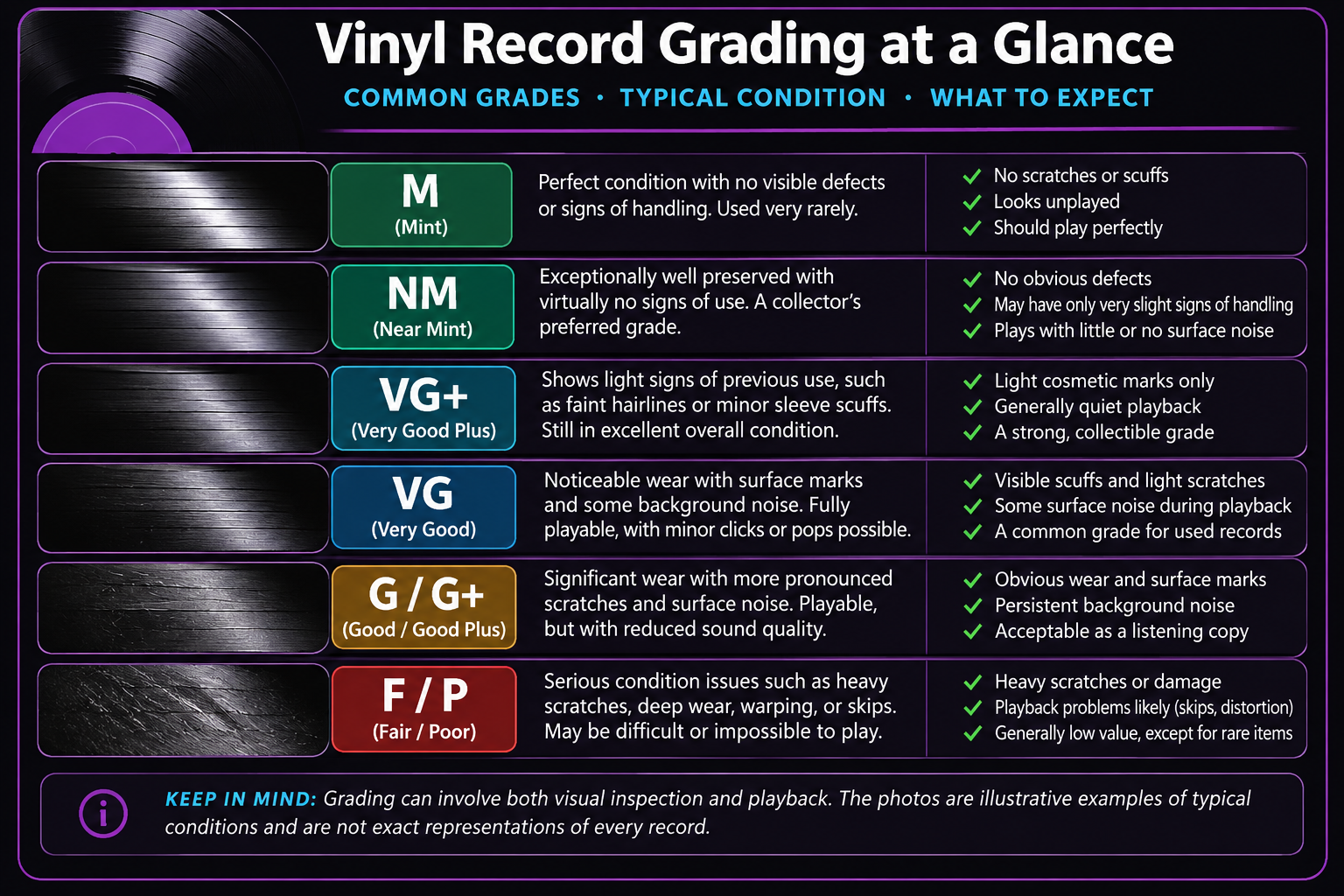
Mint (M)
Mint represents a record in perfect condition, without visible defects or evidence of handling. This grade should be used extremely sparingly.
A sealed record is not automatically Mint because manufacturing defects, warping, or other problems may exist inside an unopened package.
Near Mint (NM or M-)
A Near Mint record is exceptionally well preserved and shows virtually no signs of handling or playback. The disc should have no obvious defects and should play with little or no noticeable surface noise.
Near Mint is a desirable grade for serious collectors because it indicates a record that has been carefully maintained.
Very Good Plus (VG+)
Very Good Plus records show some signs of previous use but remain in excellent overall condition. Light sleeve scuffs, faint hairlines, or minor cosmetic imperfections may be present.
Playback should remain enjoyable, with any surface noise or imperfections generally minor and not significantly distracting.
Very Good (VG)
A Very Good record has more noticeable wear than VG+. Surface marks, groove wear, and audible background noise may be present.
Some light scratches may produce occasional clicks or pops. The record should still play through without major problems under typical grading expectations, although the listening experience may be noticeably affected.
Good Plus (G+) and Good (G)
Despite their names, Good and Good Plus records generally show substantial wear. Scratches, persistent surface noise, and groove wear may be evident.
These records may remain playable, but the sound quality can be significantly compromised. Buyers should review the seller’s description carefully and ask about skips or other serious playback problems.
Fair (F) and Poor (P)
Fair and Poor records have serious condition problems. Heavy scratches, warping, cracks, skips, or other defects may make normal playback difficult or impossible.
Such records generally have limited value as listening copies, although exceptionally rare items may still interest collectors as artifacts or display pieces.
Visual Grading vs. Play Grading
Visual grading involves examining a record under suitable lighting to identify scratches, scuffs, warping, and other physical defects. It is quick and useful, but it cannot reveal every playback issue.
Play grading involves listening to the record on properly functioning equipment to evaluate surface noise, distortion, skipping, and other audible problems.
For valuable records, combining visual inspection with playback testing provides a more complete understanding of condition. When buying online, look for sellers who clearly explain whether their grade is visual, playback-based, or both.
How to Inspect a Vinyl Record
- Hold the record by its edges and center label to avoid transferring oils to the grooves.
- Examine both sides under a bright, indirect light.
- Look for scratches, sleeve scuffs, groove wear, and unusual surface marks.
- Check whether the record lies reasonably flat and rotates without excessive warping.
- Inspect the spindle area for signs of repeated handling.
- When possible, listen for persistent surface noise, distortion, clicks, and skipping.
Remember that dirt and static can cause noise that does not necessarily indicate permanent groove damage. Appropriate cleaning may improve playback, but cleaning cannot repair scratches or worn grooves.
How Record Sleeves Are Graded
Record sleeves are generally graded separately from the vinyl itself. Collectors examine the front and back artwork, seams, corners, spine, and any inserts or original inner sleeves.
Common sleeve defects include ring wear, seam splits, corner damage, writing, stickers, stains, and fading. A rare original sleeve in excellent condition can contribute substantially to an album’s desirability.
When comparing listings, pay attention to whether the seller provides separate grades for the media and sleeve.
Why Condition Affects Vinyl Record Value
Condition can make a major difference in market value. A highly collectible pressing in Near Mint condition may sell for substantially more than a heavily worn copy of the same edition.
However, there is no universal multiplier that applies to every album. The price difference between NM, VG+, and VG depends on the specific pressing, its rarity, demand, and available sales history.
To make meaningful comparisons, identify the correct pressing first. Our vinyl pressing identification guide explains how catalog numbers, labels, and runout markings can help distinguish editions.
Common Vinyl Grading Mistakes
- Assuming a sealed record must be Mint.
- Grading a record without examining both sides.
- Confusing removable dirt with permanent groove damage.
- Ignoring scratches that produce audible clicks or skips.
- Using the same grade for the disc and sleeve without inspecting them separately.
- Assuming that every seller applies grading standards identically.
- Comparing prices from different pressings as though they were the same edition.
How to Grade Records More Consistently
Consistency is more useful than optimistic grading. Inspect records under similar lighting conditions, use a reliable playback system when possible, and describe specific defects rather than relying exclusively on a letter grade.
When selling, conservative grading and accurate descriptions can help prevent disappointed buyers and returns. When buying, ask for photographs and playback details if the listing leaves important questions unanswered.
Know Your Record’s Condition. Explore Its Value.
Once you’ve identified your pressing and assessed its condition, KlassicVinyl can help you research condition-based Discogs pricing and comparable eBay listings to better understand its potential market value.