Vinyl Inner Sleeves Explained
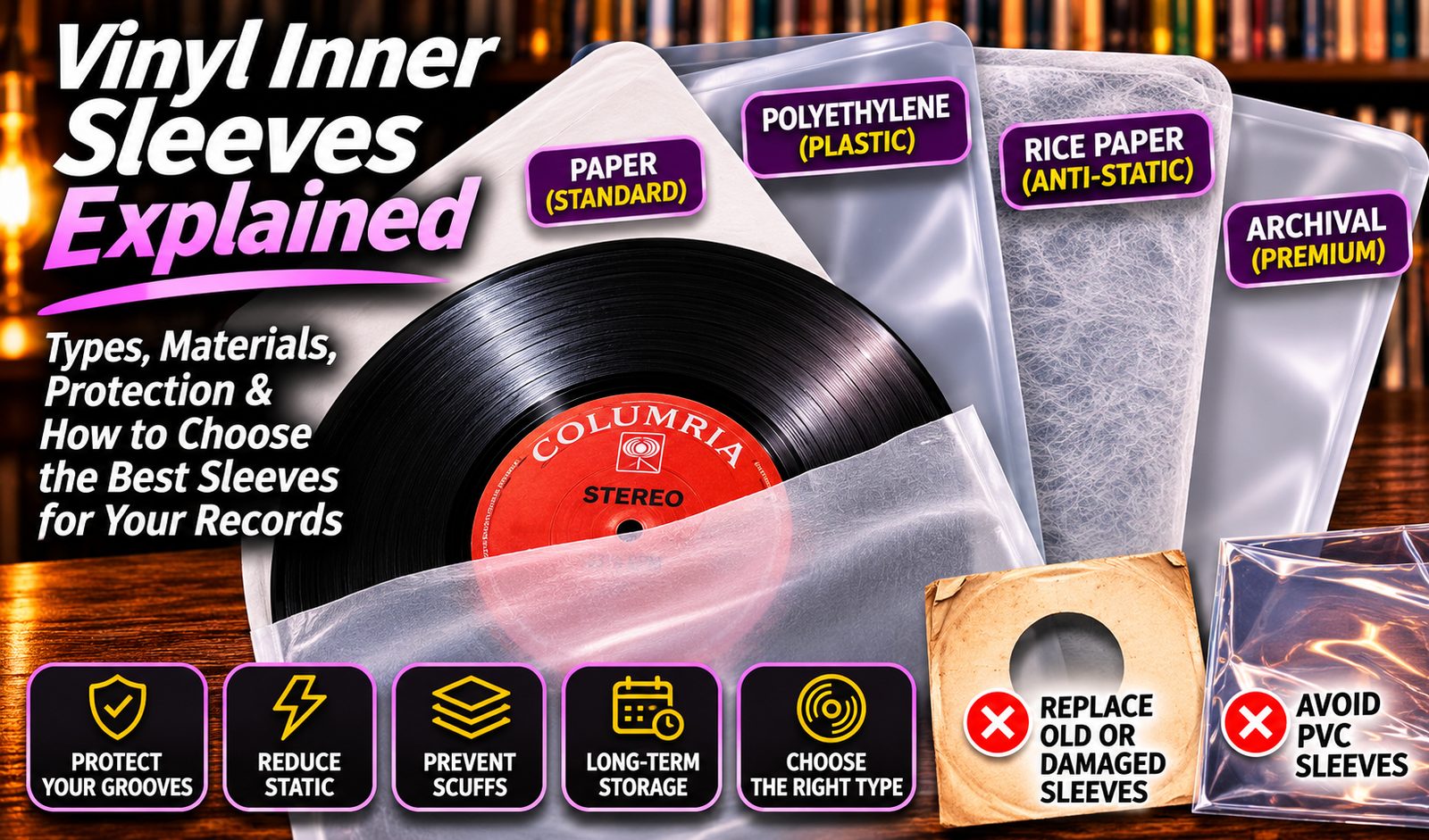
Vinyl inner sleeves are one of the simplest ways to protect a record collection. Although they may seem like minor accessories, the materials used in inner sleeves can influence how much dust, static electricity, and handling-related wear your records experience.
Many records are sold in basic paper sleeves, while others arrive in plastic-lined or premium anti-static sleeves. Collectors also encounter older sleeves made from materials that may not be suitable for long-term contact with vinyl.
Understanding the differences can help you choose the right sleeve for everyday albums, valuable first pressings, promotional records, and long-term storage.
In this guide, we’ll compare common sleeve materials, explain their advantages and disadvantages, and show you how to replace and store inner sleeves safely.
What Are Vinyl Inner Sleeves?
Vinyl inner sleeves are protective envelopes placed directly around records before the discs are inserted into their album jackets or storage covers.
Unlike outer sleeves, which protect album artwork and jackets, inner sleeves are designed primarily to protect the record itself.
A properly chosen inner sleeve can help:
- Reduce contact between grooves and abrasive surfaces.
- Limit dust and loose debris reaching the record.
- Reduce static buildup during handling.
- Protect records when removing and replacing them.
- Provide a stable storage environment.
- Help preserve record condition over time.
However, no inner sleeve can prevent every type of damage. Proper handling, cleaning, and storage remain essential.
1. Standard Paper Inner Sleeves
Paper inner sleeves have been widely used by record manufacturers for decades. They are inexpensive, lightweight, and easy to manufacture.
Some are plain white or brown paper, while others feature printed advertisements, lyrics, artwork, or record-company information.
Advantages of Paper Sleeves
- Affordable and widely available
- Easy to replace
- Often supplied with new records
- Can include original artwork or historical information
Disadvantages of Paper Sleeves
- Paper fibers and dust may transfer to the record.
- Rough surfaces can contribute to light scuffing.
- Some paper sleeves generate static during removal.
- Old sleeves may become brittle, dirty, or deteriorated.
For frequently played or valuable records, many collectors prefer a smoother, plastic-lined sleeve.
Collector Tip: Never discard an original printed inner sleeve simply because you upgrade the record’s protection. Original sleeves can be important to a pressing’s completeness and collector value. Store the original safely alongside the album.
2. Polyethylene Inner Sleeves
Polyethylene inner sleeves are made from a smooth plastic material commonly used for record protection.
They are available in different thicknesses and designs, including simple transparent envelopes and more structured versions.
Advantages of Polyethylene Sleeves
- Smooth surfaces reduce friction during handling.
- They do not shed paper fibers.
- Many designs are intended to reduce static problems.
- They are generally suitable for long-term vinyl storage when properly manufactured.
- Transparent material makes labels easier to identify.
High-density polyethylene, commonly abbreviated HDPE, is frequently used in quality inner sleeves because it combines a smooth surface with useful durability.
The term polyethylene does not guarantee that every sleeve performs identically. Thickness, construction, cleanliness, and manufacturing quality can vary.
3. Rice-Paper-Style Anti-Static Sleeves
Rice-paper-style inner sleeves are popular among collectors seeking additional protection for their records.
Despite the name, many modern products described as rice-paper sleeves are not made from traditional rice paper. They typically use polyethylene layers combined with a lightweight reinforcing sheet.
This construction helps the sleeve maintain its shape while providing a smooth surface against the vinyl.
Why Collectors Like Them
- Soft contact surfaces help reduce handling scuffs.
- Low-static materials can make records easier to remove.
- Reinforced construction helps prevent folding and bunching.
- They are suitable for many collectible LPs.
- They can be reused when clean and undamaged.
These sleeves are often marketed as anti-static, but no sleeve eliminates all static electricity under every condition. Room humidity, record cleanliness, and handling also matter.
4. Archival-Quality Inner Sleeves
The term archival-quality generally describes materials intended for stable, long-term storage.
For vinyl records, collectors often look for sleeves made from stable, non-PVC plastics such as suitable polyethylene or polypropylene.
However, the word archival is sometimes used as a marketing description. It does not automatically guarantee a particular standard of performance.
What to Look For
- Clearly identified sleeve materials
- Non-PVC construction
- Smooth surfaces contacting the record
- Minimal shedding or loose debris
- Good manufacturing consistency
- Proper sizing without excessive tightness
- Reliable information from the manufacturer
A well-made polyethylene sleeve may provide excellent long-term protection without carrying a premium archival label.
5. Paper-Lined and Poly-Lined Inner Sleeves
Poly-lined paper sleeves combine the structure of a paper envelope with a smooth plastic lining.
They are often a practical compromise between standard paper sleeves and premium multi-layer products.
The paper layer helps the sleeve maintain its shape, while the plastic lining reduces direct contact between the record and paper fibers.
For many collectors, good-quality poly-lined paper sleeves provide an effective balance of protection, convenience, and price.
6. Why PVC Sleeves Should Be Avoided
Some older and specialty record sleeves are made from flexible polyvinyl chloride, commonly called PVC.
Flexible PVC can contain plasticizers and other additives. Under unfavorable storage conditions, certain PVC materials can interact with nearby record surfaces and contribute to haze or other deterioration.
The risk depends on the material formulation, temperature, storage duration, and contact conditions. Nevertheless, collectors generally have safer alternatives for direct contact with vinyl.
Safer Storage Practices
- Avoid unidentified flexible plastic sleeves for direct record contact.
- Prefer products that clearly specify polyethylene or another suitable stable material.
- Keep records away from excessive heat.
- Replace suspicious sleeves if they become sticky, cloudy, or deteriorated.
- Inspect records for unusual haze before returning them to storage.
PVC-related deterioration can be difficult or impossible to reverse. Prevention is the better approach.
7. Comparing Vinyl Inner Sleeve Types
| Sleeve Type | Advantages | Considerations |
|---|---|---|
| Standard paper | Affordable and widely available | May shed fibers or cause scuffing |
| Polyethylene | Smooth and low-shedding | Quality and thickness vary |
| Poly-lined paper | Structured with smooth lining | May be bulkier than thin plastic |
| Rice-paper-style | Smooth, reinforced, low-static design | Often more expensive |
| Archival-quality | Designed for long-term stability | Verify actual materials |
| Flexible PVC | Sometimes thick and transparent | Avoid for direct long-term record contact |
8. Do Anti-Static Inner Sleeves Really Work?
Static electricity can attract dust to vinyl records and make handling more difficult.
Low-static inner sleeves can help reduce friction-related static buildup compared with some conventional paper sleeves.
However, sleeve performance varies, and a sleeve alone cannot guarantee a static-free record.
Maintaining reasonable indoor humidity, handling records by their edges, and using appropriate cleaning methods can also help manage static-related problems.
For additional maintenance advice, visit our How to Clean Vinyl Records Safely guide.
9. How to Replace a Vinyl Inner Sleeve
Replacing an old or unsuitable inner sleeve is straightforward, but careful handling helps prevent accidental damage.
- Prepare a clean surface. Make sure your hands and work area are clean and dry.
- Remove the record carefully. Hold the disc by its edges and labeled center area.
- Inspect the record. Look for dust, debris, residue, or unusual marks.
- Clean when necessary. Use an appropriate record-safe cleaning method before placing a dirty disc into a fresh sleeve.
- Open the new sleeve. Ensure it is clean and free of loose manufacturing debris.
- Insert the record gently. Avoid dragging the playing surface across a folded edge.
- Return it to the jacket. Position the opening to reduce the chance of the record sliding out.
- Preserve original inserts. Keep printed or historically significant sleeves with the album.
If an old sleeve appears stuck to the record or has left an unusual residue, do not forcefully pull or scrape it away.
10. Should You Keep Original Inner Sleeves?
Yes, especially when the original sleeve contains printed lyrics, photographs, advertisements, catalog information, or artwork.
Collectors may consider original inner sleeves part of a record’s complete packaging.
For valuable or collectible albums, a missing original sleeve can sometimes affect desirability.
A practical approach is to place the record in a new protective inner sleeve while keeping the original printed sleeve safely inside the jacket or alongside it in an appropriate protective outer cover.
Our How to Identify Rare Vinyl Records guide explains why original packaging details can matter.
11. Choosing the Correct Sleeve Size
Inner sleeves are available in sizes intended for different record formats.
- 12-inch sleeves: Commonly used for LP albums and 12-inch singles.
- 10-inch sleeves: Used for many older albums and specialty releases.
- 7-inch sleeves: Designed for many 45 RPM singles.
- 78 RPM sleeves: Available in sizes and materials appropriate for older shellac discs.
Check the actual dimensions before purchasing. Sleeve dimensions and fit can vary between manufacturers.
Traditional shellac 78 RPM records are more brittle than modern vinyl records and require extra care when handling and storing them.
Learn more about formats in our 33, 45 & 78 RPM Records Explained guide.
12. How Often Should Inner Sleeves Be Replaced?
There is no universal replacement schedule for vinyl inner sleeves.
A high-quality sleeve can remain useful for years when it stays clean, intact, and free from contamination.
Consider replacing an inner sleeve when it becomes:
- Torn, split, or badly wrinkled
- Contaminated with dust or debris
- Sticky or chemically deteriorated
- Excessively tight or difficult to use
- Rough enough to scuff the record
- Visibly damaged by moisture or mold
Avoid reusing a dirty sleeve after cleaning the record. Doing so can reintroduce debris onto the playing surface.
13. Are Expensive Inner Sleeves Worth It?
Premium inner sleeves may be worthwhile for frequently played albums, valuable pressings, or collections intended for long-term preservation.
However, price alone is not a reliable measure of quality.
A well-made polyethylene or poly-lined paper sleeve can offer practical protection at a reasonable cost.
Collectors with large inventories may choose premium sleeves for their most important records and more economical, suitable sleeves for everyday albums.
14. Common Vinyl Inner Sleeve Mistakes
- Using damaged paper sleeves. Rough edges and debris can contribute to surface scuffs.
- Choosing unidentified plastics. Some materials are unsuitable for prolonged record contact.
- Discarding original printed sleeves. Original inserts can matter to collectors.
- Placing dirty records into clean sleeves. Dust and debris may contaminate the new sleeve.
- Using sleeves that fit too tightly. Excessive friction can make handling difficult.
- Assuming anti-static means dust-proof. Even low-static sleeves require careful handling.
- Ignoring storage conditions. Heat, humidity, and improper shelving can still damage records.
- Treating all plastic sleeves as identical. Material formulation and construction matter.
Vinyl Inner Sleeves Checklist
- Identify the sleeve material.
- Choose a smooth, non-abrasive inner surface.
- Prefer suitable non-PVC materials.
- Select the correct sleeve size.
- Inspect sleeves for debris and damage.
- Clean records before placing them in new sleeves.
- Preserve original printed sleeves and inserts.
- Replace deteriorated or contaminated sleeves.
- Handle records by their edges and labels.
- Store records vertically in suitable shelving.
- Keep records away from excessive heat and moisture.
- Check valuable records periodically for storage problems.
Frequently Asked Questions
What are the best vinyl inner sleeves?
Well-made polyethylene, poly-lined paper, and rice-paper-style low-static sleeves are popular choices. The best option depends on material quality, fit, record value, and personal preference.
Are paper inner sleeves bad for vinyl?
Paper sleeves are not automatically harmful, but some can shed fibers or contribute to light scuffing. Smooth plastic-lined sleeves often provide better protection during repeated handling.
Do anti-static sleeves prevent dust?
They can help reduce static-related dust attraction, but they do not make records completely dust-proof. Clean handling and proper storage remain important.
Are rice-paper sleeves actually made from rice paper?
Many modern rice-paper-style sleeves use polyethylene and a reinforcing layer rather than traditional rice paper. Check the manufacturer’s material description.
Should I replace the inner sleeves on new records?
Not necessarily. If a new record already includes a clean, well-made, suitable sleeve, replacement may offer little additional benefit. Basic paper sleeves may be worth upgrading.
Can PVC sleeves damage vinyl records?
Certain flexible PVC materials can contribute to deterioration or haze under unfavorable storage conditions. Stable, suitable non-PVC materials are generally preferred for direct long-term contact.
Should I keep original printed inner sleeves?
Yes. Original printed sleeves can be important to a record’s completeness and collector value. You can protect the record in a replacement sleeve while retaining the original.
How often should I change vinyl inner sleeves?
Replace sleeves when they become dirty, torn, contaminated, deteriorated, or unsuitable for the record. Good-quality sleeves do not require replacement on a fixed schedule.
Final Thoughts
Choosing the right vinyl inner sleeves is a simple but worthwhile part of record collecting.
Paper sleeves remain common, but smooth polyethylene, poly-lined paper, and quality rice-paper-style sleeves can offer practical advantages for reducing friction, dust, and static-related problems.
For long-term preservation, focus on suitable materials, correct sizing, clean handling, and stable storage conditions. Keep original printed sleeves when they contribute to the record’s completeness.
Continue exploring our How to Store Vinyl Records, How to Clean Vinyl Records Safely, and other Collector Guides.
Protect Your Records. Discover Their Value.
Proper inner sleeves help protect record condition. Understanding the exact pressing and its market value is another important part of collecting.
At KlassicVinyl.com, you can quickly compare Discogs record values by condition alongside comparable eBay listings. New registered members receive 2 free record searches.