How to Clean Vinyl Records Safely
Keeping vinyl records clean is an important part of protecting your collection and maintaining enjoyable playback. Whether you own a handful of favorite albums or hundreds of collectible pressings, proper cleaning can help remove dust, fingerprints, and debris that accumulate over time.
Vinyl records require careful handling. Using the wrong cleaning products or applying excessive pressure can cause damage, while appropriate cleaning methods can help preserve both the record’s condition and its sound quality.
This guide explains practical cleaning techniques, recommended equipment, common mistakes, and the precautions every vinyl collector should understand.
Why Cleaning Vinyl Records Matters
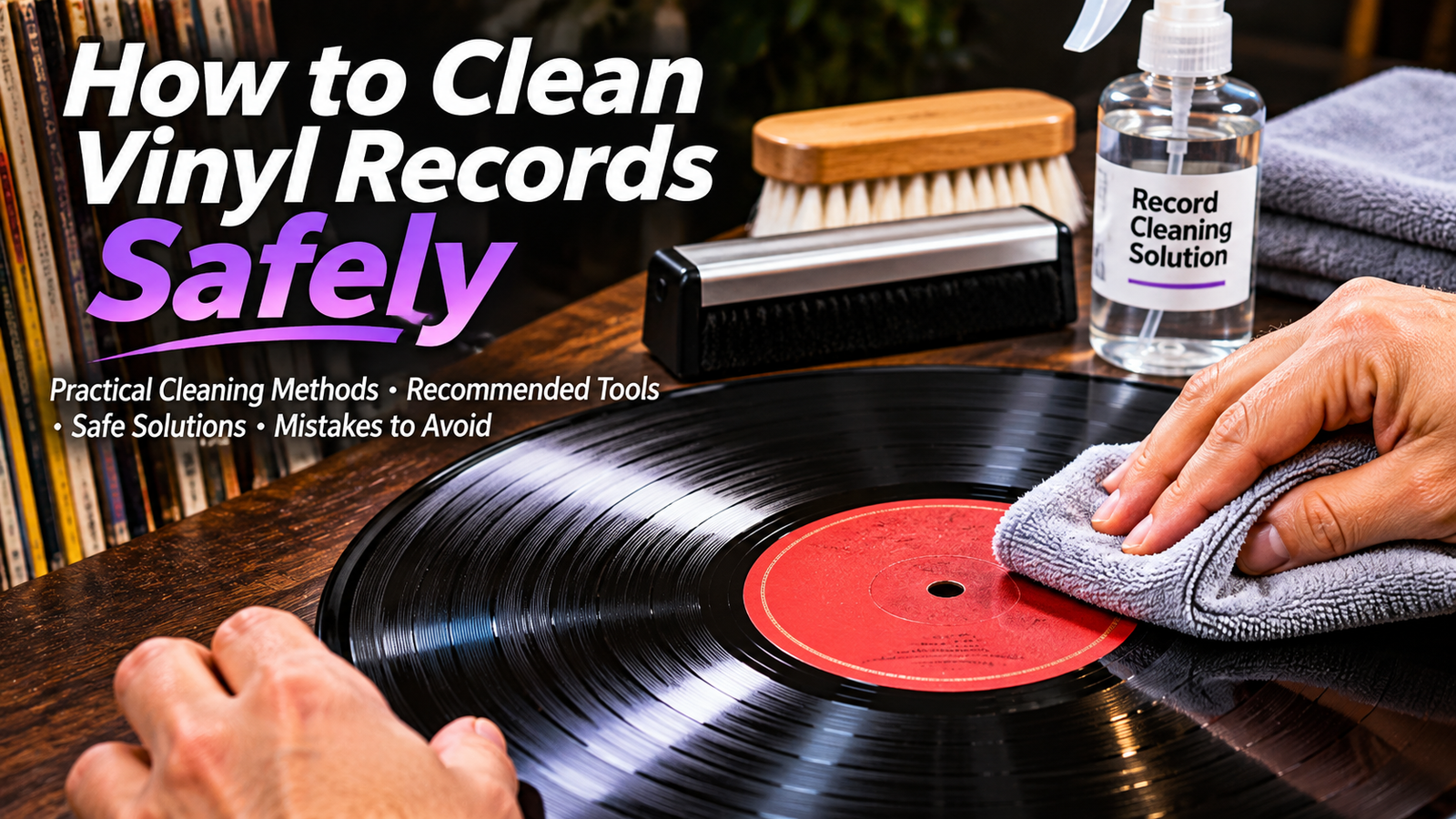
Vinyl records contain microscopic grooves that carry the recorded audio. During playback, the turntable stylus follows these grooves to reproduce sound.
Dust, dirt, fingerprints, and other contaminants can interfere with playback. Depending on the type and amount of contamination, listeners may experience increased surface noise, pops, crackles, or distortion.
Regular maintenance can help prevent debris from accumulating in the grooves. However, cleaning cannot repair scratches, groove wear, or other permanent physical damage.
Essential Vinyl Record Cleaning Tools
Several tools are available for maintaining vinyl records. The appropriate equipment depends on the condition of your collection and how frequently you clean records.
Carbon-Fiber Record Brush
A carbon-fiber brush is commonly used to remove loose surface dust before playback. These brushes are designed specifically for record surfaces and can be useful for routine maintenance.
Use a clean brush with gentle pressure and follow the manufacturer’s instructions.
Vinyl Record Cleaning Solution
Cleaning solutions formulated specifically for vinyl records can help remove fingerprints, oils, and stubborn dirt that dry brushing may not eliminate.
Choose a product intended for your record format and follow its instructions for application, rinsing, and drying.
Record Cleaning Pads and Brushes
Specialized wet-cleaning pads and brushes can help loosen contaminants from record grooves when used with an appropriate cleaning solution.
Avoid abrasive materials or excessive pressure that could damage the playing surface.
Record Cleaning Machines
Manual record washers, vacuum cleaning machines, and ultrasonic cleaning systems are available for collectors who frequently clean records.
These systems may offer more consistent cleaning, particularly for large collections or heavily contaminated used records. However, expensive equipment is not necessary for every collector.
Method 1: Dry Cleaning Vinyl Records
Dry cleaning is generally suitable for removing loose dust from records that are otherwise reasonably clean.
- Inspect the record. Look for visible dirt, fingerprints, or debris before playback.
- Place the record on a clean turntable platter. Make sure the platter mat is free of dust and grit.
- Use a carbon-fiber brush. Gently contact the playing surface according to the brush manufacturer’s directions.
- Remove collected dust. Avoid dragging debris across the grooves or pressing firmly into the surface.
- Inspect the record again. If fingerprints or stubborn contaminants remain, consider wet cleaning.
Dry brushing is useful for routine maintenance, but it may not remove oils, dried residue, or deeply embedded contaminants.
Method 2: Wet Cleaning Vinyl Records
Wet cleaning is useful when a record contains fingerprints, oily residue, or dirt that cannot be removed through gentle dry brushing.
The exact procedure depends on the cleaning solution and equipment being used.
- Prepare a clean work area. Use a stable surface or a dedicated record-cleaning device.
- Remove loose dust. Gently brush away surface particles before applying liquid.
- Apply the cleaning solution. Follow the product manufacturer’s directions and keep moisture away from the center label.
- Clean along the grooves. Use a suitable record-cleaning pad or brush with gentle pressure.
- Remove the cleaning fluid. Follow the product’s rinsing or fluid-removal instructions so dirty solution does not remain in the grooves.
- Allow complete drying. Use the recommended drying method in a clean, dust-free environment.
- Inspect and store the record. Once completely dry, return it to a clean inner sleeve.
Can You Clean Vinyl Records With Water?
Water may be used as part of a vinyl-specific cleaning process, but the type of water matters.
Ordinary tap water can contain minerals and other impurities that may leave deposits on the record surface after drying.
When a cleaning system requires water, follow the manufacturer’s recommendations. Distilled or deionized water is commonly specified for record-cleaning applications.
Avoid soaking paper center labels, as moisture can cause staining, lifting, or other damage.
Should You Use Alcohol to Clean Vinyl Records?
Collectors sometimes encounter cleaning formulas containing alcohol. However, not every record material is compatible with alcohol-based solutions.
Household rubbing alcohol should not be treated as a universal vinyl-cleaning product. Some specialized formulations contain controlled amounts of alcohol, but compatibility depends on the record material and product instructions.
Alcohol-based cleaning products are particularly unsuitable for certain historical record formats, including shellac records.
For routine cleaning, a commercially prepared solution specifically designed for vinyl records is generally the simpler approach.
Cleaning Fingerprints From Vinyl Records
Fingerprints can leave oils and residue on a record’s playing surface. These contaminants may attract additional dust and can sometimes contribute to unwanted playback noise.
For visible fingerprints, use a suitable vinyl-cleaning solution and an appropriate soft cleaning pad or brush.
Avoid rubbing the record aggressively or using household paper towels, abrasive cloths, or unspecified cleaning chemicals.
Preventing fingerprints is easier than removing them. Handle records by their outer edges and labeled center areas whenever possible.
Common Vinyl Cleaning Mistakes
Several common mistakes can reduce the effectiveness of cleaning or potentially damage a record.
- Using household glass cleaners: These products may contain additives or solvents unsuitable for records.
- Scrubbing too aggressively: Excessive pressure can damage the playing surface.
- Using paper towels: These may shed fibers or cause scratches when contaminated with grit.
- Applying unknown chemical mixtures: Improper solutions can leave residues or damage sensitive materials.
- Soaking paper labels: Moisture can permanently damage label printing or adhesives.
- Playing records before they are dry: Allow complete drying before playback.
- Returning records to dirty sleeves: Contaminated sleeves can immediately reintroduce dust and debris.
How Often Should Vinyl Records Be Cleaned?
There is no universal cleaning schedule that applies to every record collection.
The appropriate frequency depends on the record’s condition, storage environment, handling, and playback habits.
For well-maintained records, occasional gentle dry brushing may be sufficient to remove loose dust. More thorough wet cleaning is useful when visible contamination or persistent dirt-related noise remains.
Used records should be inspected carefully before their first playback, especially if their previous storage conditions are unknown.
Can Cleaning Remove Pops and Crackles?
Sometimes. Dust, dirt, and other contaminants can produce unwanted noise during playback. Removing these materials may noticeably improve sound quality.
However, not every pop or crackle is caused by dirt.
Scratches, worn grooves, manufacturing defects, and other physical problems can also create audible noise. Cleaning cannot reverse this type of damage.
Understanding the difference between contamination and permanent wear is especially important when evaluating collectible records.
Our Vinyl Record Grading Guide explains how physical condition influences record grading.
How to Protect Records After Cleaning
Cleaning is only one part of proper vinyl record care. Storage and handling also play important roles in preserving a collection.
- Store records vertically rather than stacking them horizontally.
- Keep records away from excessive heat and direct sunlight.
- Use clean, nonabrasive inner sleeves.
- Handle records by their edges and center labels.
- Keep turntable surfaces and equipment clean.
- Maintain the stylus according to the cartridge manufacturer’s instructions.
For additional preservation advice, read our How to Store Vinyl Records guide.
Frequently Asked Questions About Vinyl Cleaning
Can I use dish soap to clean vinyl records?
Household dish soaps may contain fragrances, additives, or other ingredients that leave residue. A cleaning product specifically formulated for vinyl records is generally preferable.
Should brand-new vinyl records be cleaned?
Inspect new records before playback. Some may contain dust or packaging debris. Remove loose particles safely and use wet cleaning when necessary.
Can I use a microfiber cloth?
A clean, suitable microfiber cloth may be used with certain record-cleaning systems, but it should be specifically appropriate for delicate record surfaces. Avoid dry rubbing or dragging trapped grit across the grooves.
Will cleaning restore a scratched record?
No. Cleaning can remove contaminants, but it cannot repair physical scratches or groove wear.
Are record cleaning machines worth buying?
They can be useful for collectors with large collections or those who regularly purchase used records. For occasional cleaning, a quality manual cleaning system may be sufficient.
Final Thoughts on Cleaning Vinyl Records
Keeping vinyl records clean does not have to be complicated. Gentle handling, appropriate cleaning tools, and careful storage can help preserve records and maintain enjoyable playback.
Start with the least aggressive cleaning method appropriate for the record’s condition. Use specialized cleaning products when necessary, and avoid unnecessary chemical experiments or abrasive techniques.
Proper cleaning helps protect your collection, but accurate identification and grading remain important when researching a record’s collectible value.
For additional information, explore our Vinyl Record Identification Guide and How Much Are My Old Vinyl Records Worth? guide.
Cleaned Your Records? Discover Their Value.
Once your records are properly cleaned and identified, KlassicVinyl can help you research condition-based Discogs pricing and comparable eBay listings to better understand their potential market value.
New registered users receive two free record searches.
Discover What Your Vinyl Records Are Worth
Now that you know how to properly clean and protect
your vinyl records, take the next step and discover
their potential market value. KlassicVinyl helps you
research Discogs condition-based pricing and
comparable eBay listings quickly and easily.
New members receive 2 free record searches!