How to Store Vinyl Records Properly
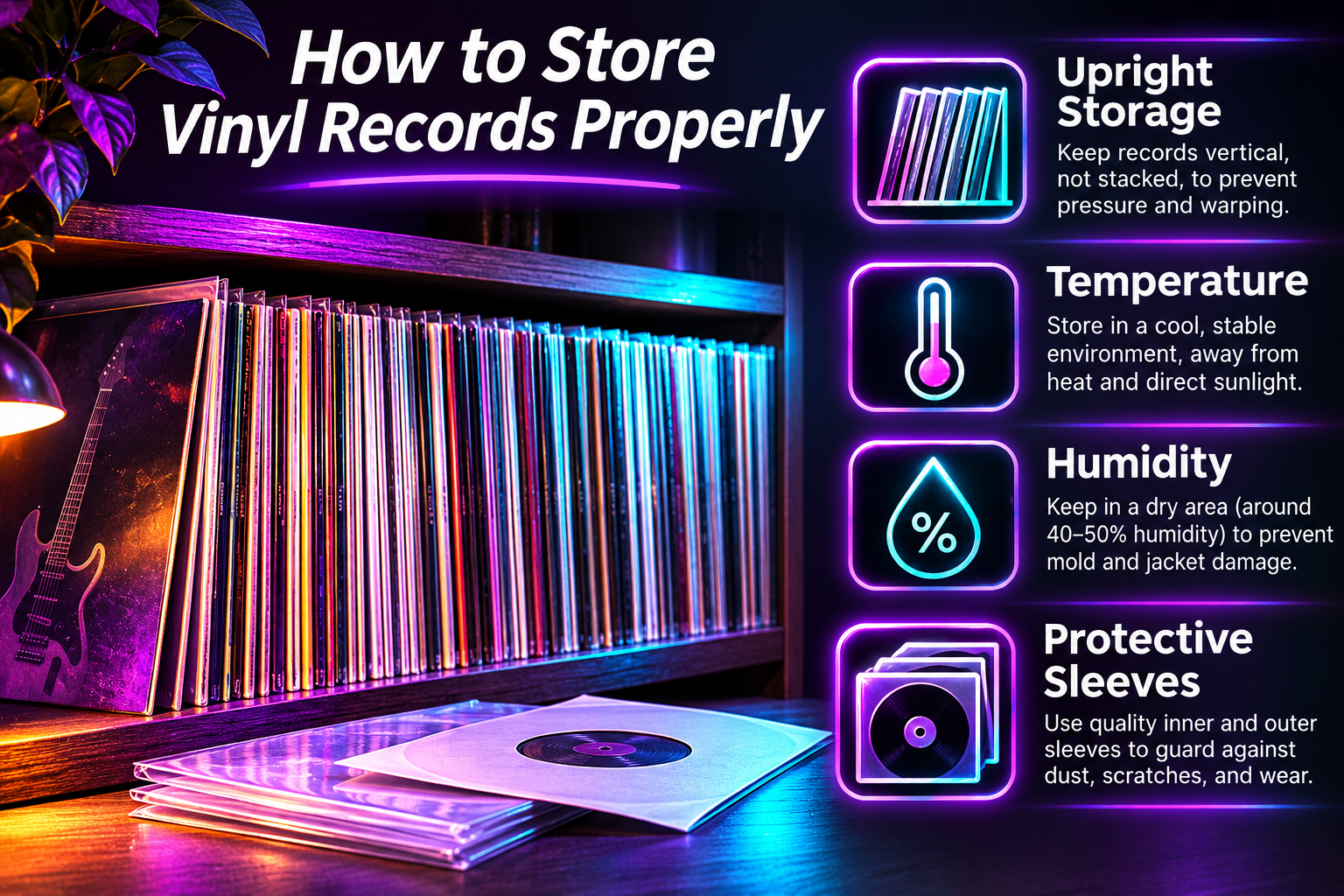
A well-maintained vinyl record collection can provide decades of listening enjoyment. But even records that are rarely played can develop problems when stored incorrectly. Heat, pressure, moisture, dust, and improper handling may gradually damage the vinyl or its original packaging.
Whether you own a handful of favorite albums or hundreds of collectible pressings, learning how to store vinyl records properly is one of the simplest ways to protect your collection.
This guide explains practical storage methods, common mistakes, and the precautions collectors can take to preserve both playback quality and long-term condition.
Why Proper Vinyl Storage Matters
Vinyl records are durable when handled carefully, but they are not indestructible. The grooves can be scratched or contaminated, while the record itself may warp when exposed to excessive heat or pressure.
Album jackets also require protection. Moisture, sunlight, rough handling, and overcrowded shelving can cause fading, stains, seam splits, and other damage.
For collectors, these problems can affect more than appearance. Record and jacket condition are important factors in determining resale value.
Learn more in our Vinyl Record Grading Explained guide.
1. Always Store Vinyl Records Vertically
One of the most important storage rules is to keep records standing upright, similar to books on a shelf.
When albums are stacked horizontally, the weight of the records above can place unnecessary pressure on those underneath. Large or uneven stacks can contribute to jacket damage and may increase the risk of warping under unfavorable conditions.
Use sturdy shelving designed to support the weight of a record collection. Albums should stand reasonably straight without leaning excessively.
Avoid packing records so tightly that removing an album requires force. At the same time, do not leave so much empty space that the records lean at steep angles.
2. Keep Records Away From Heat
Heat is one of the greatest threats to vinyl records. Excessive temperatures can cause records to deform, especially when combined with pressure or uneven support.
Avoid storing records near radiators, heating vents, fireplaces, or windows exposed to strong sunlight.
Attics, garages, vehicles, and storage spaces without climate control may experience substantial temperature fluctuations. These environments are generally less suitable for long-term vinyl storage.
A stable, comfortable indoor environment is preferable to a location that becomes extremely hot during the day and cools dramatically at night.
3. Protect Your Collection From Moisture
Excessive humidity can damage album jackets, paper labels, and printed inserts. Damp conditions may encourage mold or mildew, particularly when records are stored in poorly ventilated areas.
Basements and other moisture-prone spaces require special attention. Even if the records themselves appear unaffected, cardboard jackets may absorb moisture over time.
Choose a dry, climate-controlled room whenever possible. If humidity is a recurring problem, a dehumidifier and a reliable humidity monitor may help maintain more stable conditions.
Avoid placing record collections directly on basement floors, where they may be vulnerable to leaks or flooding.
4. Use Quality Inner Sleeves
Inner sleeves protect the playing surface from dust, scratches, and unnecessary contact with the album jacket.
Many collectors prefer archival-quality, anti-static inner sleeves made with materials suitable for long-term record storage.
Older paper sleeves may shed fibers or contain debris that can contact the grooves. However, original printed inner sleeves may also be collectible components of an album.
When replacing a sleeve for protection, retain the original printed sleeve with the jacket whenever practical, especially for collectible editions.
5. Protect Album Covers With Outer Sleeves
Clear protective outer sleeves help reduce scuffing, dust accumulation, and wear caused by repeatedly removing albums from shelves.
Choose sleeves made from materials intended for archival record storage. Avoid overly tight sleeves that bend corners or place pressure on the jacket.
Some collectors store the record in a protective inner sleeve outside the original jacket but inside the outer protective sleeve. This arrangement can reduce repeated handling of the jacket and may help protect vulnerable seams.
Whichever method you choose, make sure the record remains properly supported and the packaging is not under excessive pressure.
6. Handle Records by the Edges and Label
Proper storage begins with careful handling. Fingerprints and skin oils can transfer to the playing surface, attracting dust and potentially increasing contamination in the grooves.
When removing a record from its sleeve, handle it by the outer edge and center label whenever possible.
Avoid touching the grooves directly. Return records to their sleeves promptly after listening rather than leaving them exposed on a turntable or nearby surface.
7. Clean Records Before Long-Term Storage
Records that have accumulated dust or debris should be cleaned using methods appropriate for vinyl before being placed into long-term storage.
A suitable record brush can remove loose surface dust. More thorough cleaning may require specialized record-cleaning solutions or equipment.
Avoid household cleaners, abrasive cloths, and improvised methods that may damage the grooves or labels.
Allow cleaned records to dry fully before placing them in protective sleeves. Trapped moisture can create additional problems during storage.
8. Avoid Overcrowded Record Shelves
A tightly packed collection can make individual records difficult to remove without damaging jackets or sleeves.
Repeatedly pulling albums from overcrowded shelves may cause corner wear, split seams, and abrasion against neighboring covers.
Organize the collection with enough space for comfortable access. Dividers or separate shelf sections can help support smaller groups of records.
As the collection grows, consider adding storage capacity rather than forcing more albums into an already full shelf.
9. Protect Records During Moving and Transportation
Moving a vinyl collection requires additional precautions because records are heavy and their jackets can be damaged by shifting loads.
Use sturdy, appropriately sized boxes and pack records upright. Avoid oversized boxes that become too heavy to lift safely.
Fill excess space with suitable protective material so albums do not lean or slide excessively during transportation.
Keep boxes away from extreme temperatures and moisture. Never leave valuable records in a hot vehicle for extended periods.
10. Organize and Document Your Collection
Good organization makes it easier to locate records without unnecessary handling.
Collectors may organize albums alphabetically, by genre, by artist, or by another consistent system. Whatever method you choose, maintain enough space to browse without forcing records against one another.
For collectible albums, consider documenting catalog numbers, pressing details, condition, and original inserts.
This information can be valuable when researching records, managing insurance documentation, or eventually selling part of a collection.
Our Vinyl Identification Guide explains the details worth recording when documenting a pressing.
Common Vinyl Storage Mistakes to Avoid
- Stacking albums in large horizontal piles: This can place unnecessary pressure on lower records and jackets.
- Storing records in hot attics or garages: Extreme temperatures can increase the risk of warping.
- Keeping albums in damp basements: Moisture can damage paper materials and encourage mold.
- Using damaged or dirty inner sleeves: Debris can contact the playing surface.
- Overcrowding shelves: Tight storage can damage covers during removal.
- Leaving records exposed: Dust, accidental contact, and environmental contamination become more likely.
- Discarding original inserts: Missing packaging components can reduce the completeness of collectible editions.
Does Proper Storage Help Preserve Vinyl Record Value?
Proper storage cannot guarantee that a record will become valuable, but it can help preserve the condition that collectors consider when comparing copies.
A desirable pressing with clean vinyl, an attractive jacket, and complete original packaging may be more appealing than an otherwise identical copy showing substantial storage damage.
However, market value also depends on pressing identification, rarity, and collector demand.
For a deeper explanation, read How Much Are My Old Vinyl Records Worth?.
Frequently Asked Questions About Vinyl Storage
Should vinyl records be stored flat or upright?
Records should generally be stored upright. Large horizontal stacks can place pressure on the albums underneath and make individual records difficult to access safely.
Can vinyl records warp in storage?
Yes. Excessive heat, pressure, and improper support can contribute to warping. Stable indoor temperatures and upright storage help reduce the risk.
Are plastic sleeves good for vinyl records?
Protective sleeves made from appropriate archival materials can help protect records and jackets. Avoid unsuitable plastics or sleeves that fit too tightly.
Is it safe to store records in a garage?
A garage is generally not ideal for long-term storage if temperatures and humidity fluctuate substantially. A climate-controlled indoor space is preferable.
Should I keep original paper inner sleeves?
Yes, particularly when they contain original artwork, lyrics, advertising, or other release-specific information. You can preserve the original sleeve while using a separate protective sleeve for the vinyl itself.
How often should stored records be inspected?
There is no universal schedule, but periodically checking storage conditions, shelf support, and signs of moisture or damage is sensible, especially in areas prone to seasonal changes.
The Bottom Line: Protect the Records You Own
Proper vinyl storage does not require elaborate equipment. The fundamentals are straightforward: keep records upright, protect them from heat and moisture, use suitable sleeves, and handle them carefully.
These habits can help preserve sound quality, album artwork, and collectible condition over time.
Whether your collection consists of everyday listening favorites or potentially rare pressings, protecting your records today can make a meaningful difference in their condition years from now.
Protect Your Records. Understand Their Value.
Once you’ve identified and graded your records, use KlassicVinyl to explore condition-based Discogs prices and comparable eBay listings. Research your first three records free, with no paid subscription required.